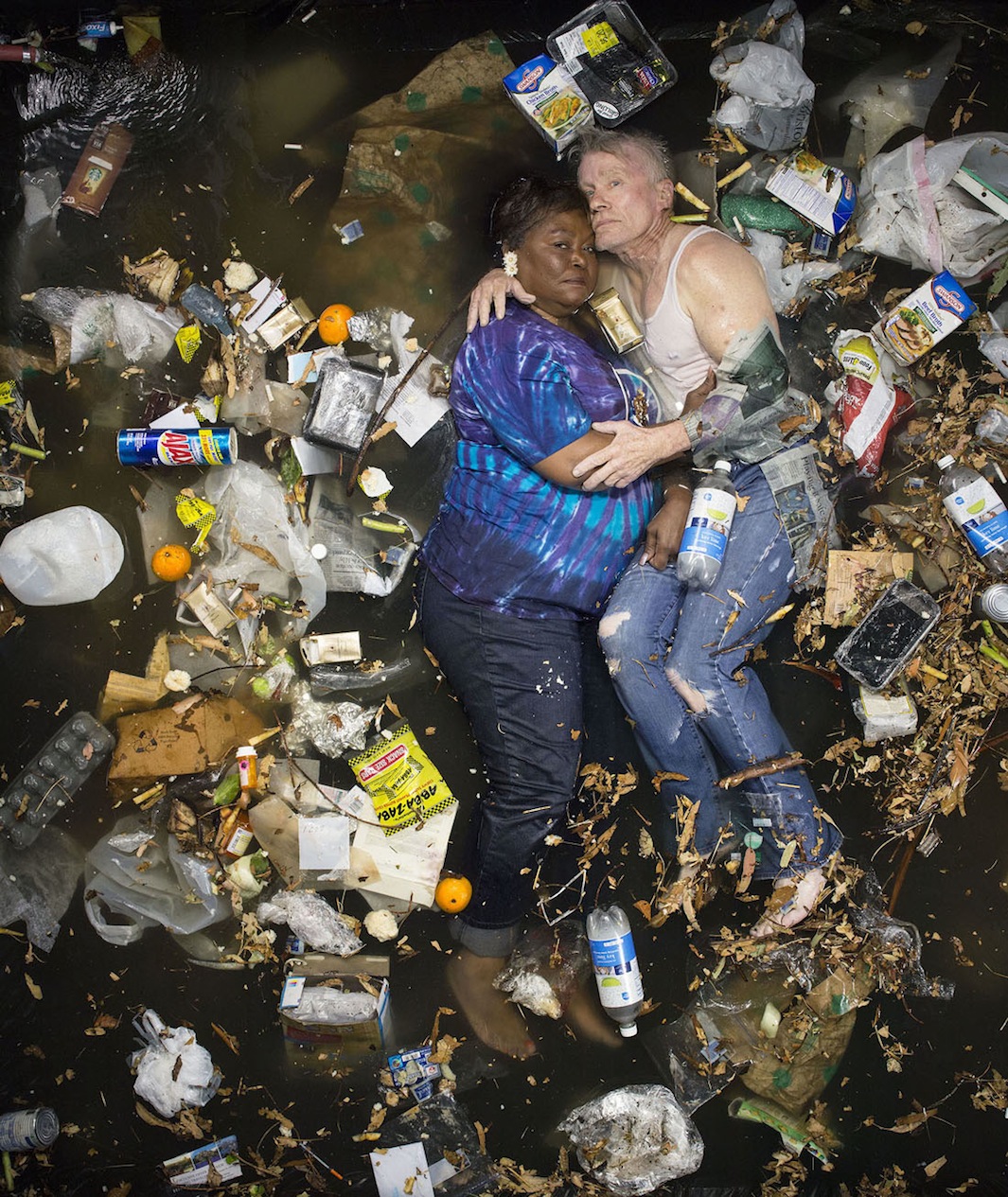
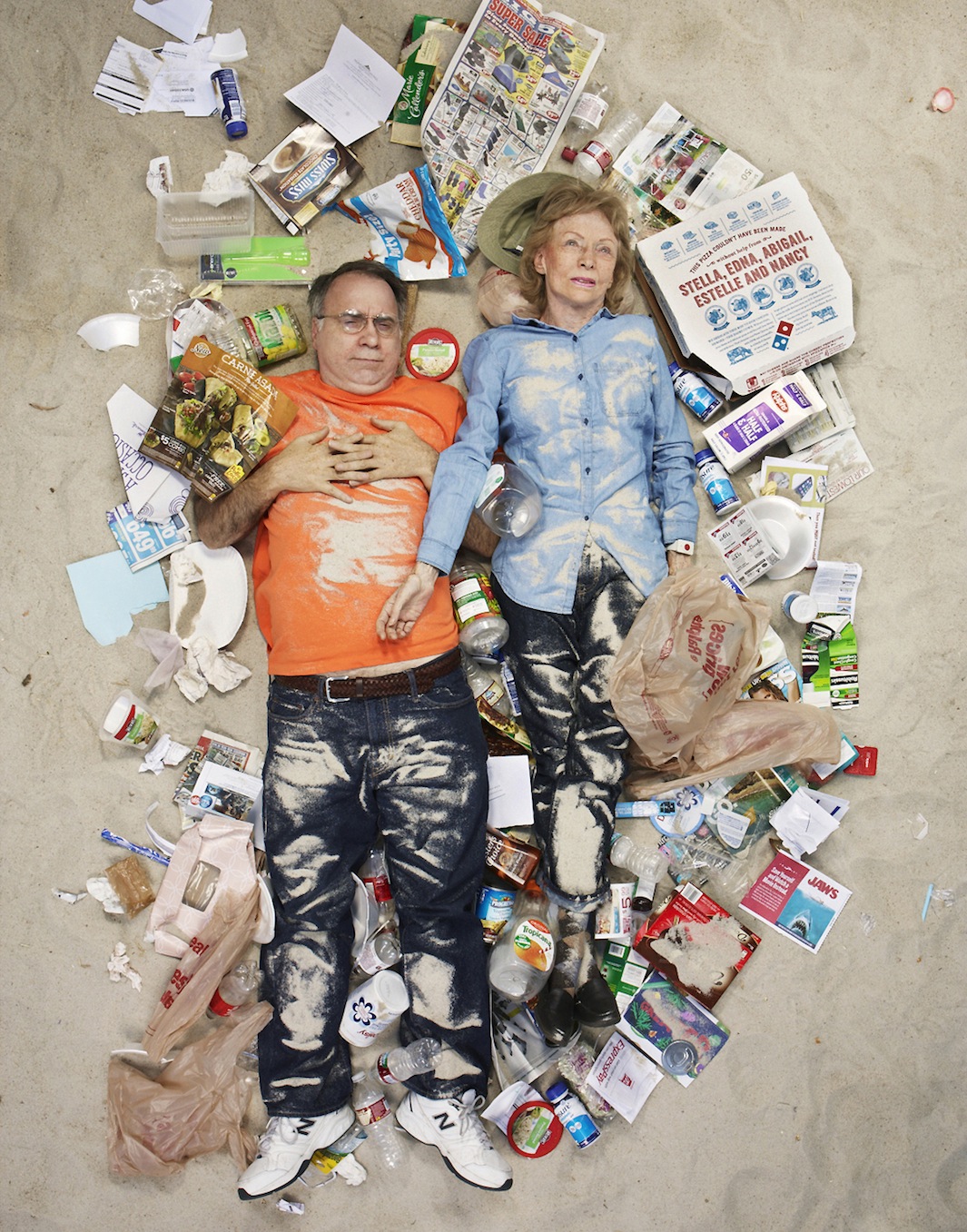
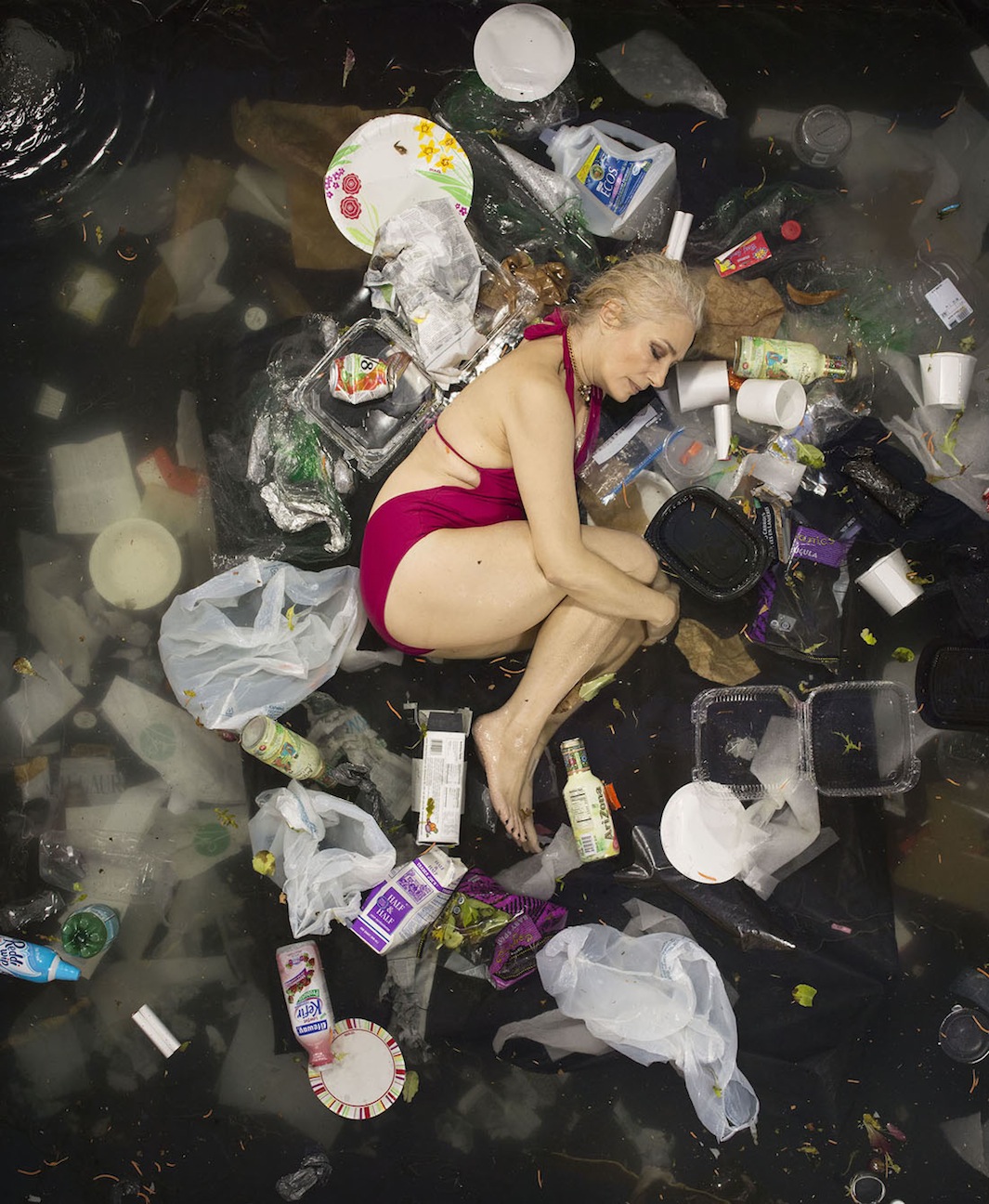
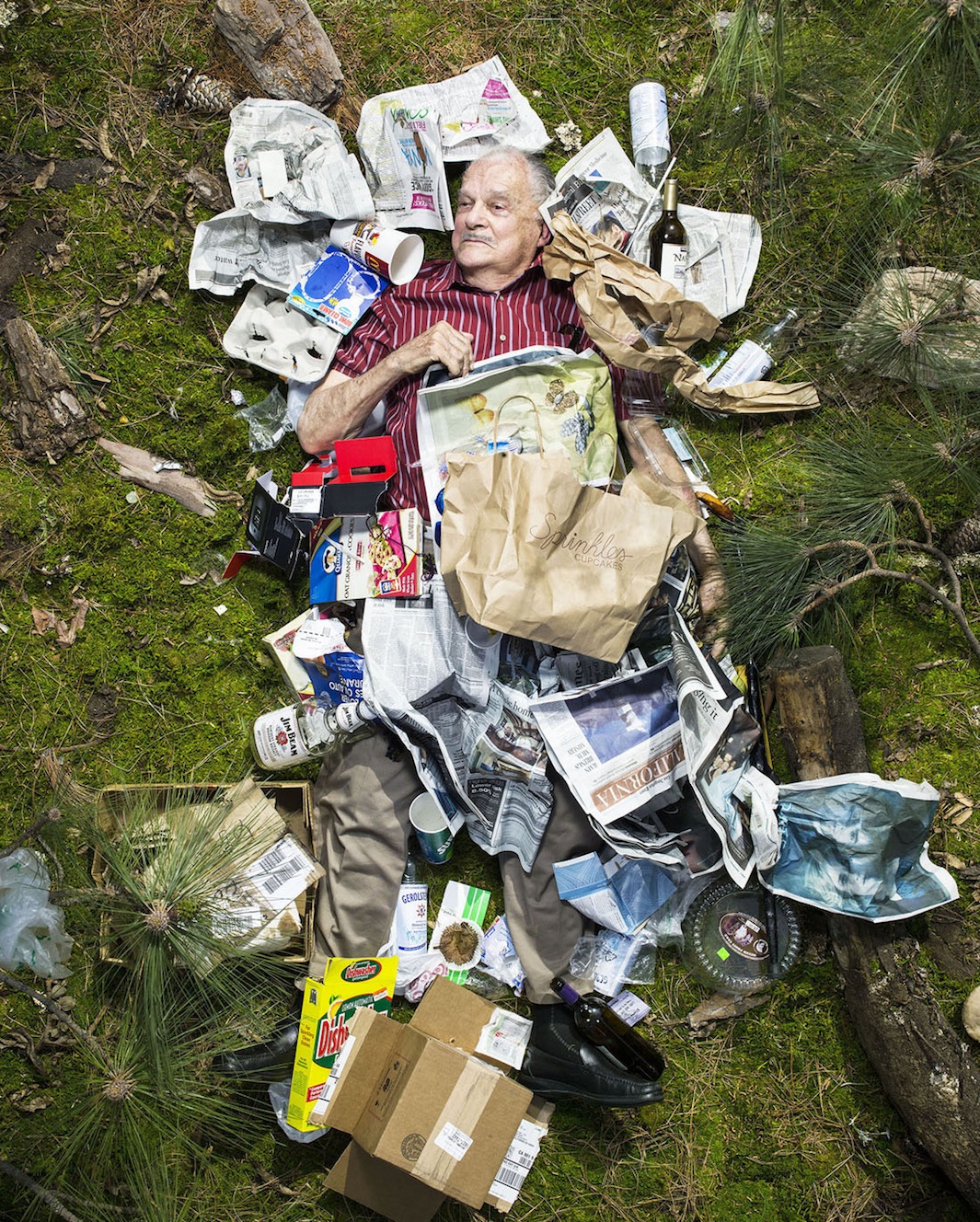
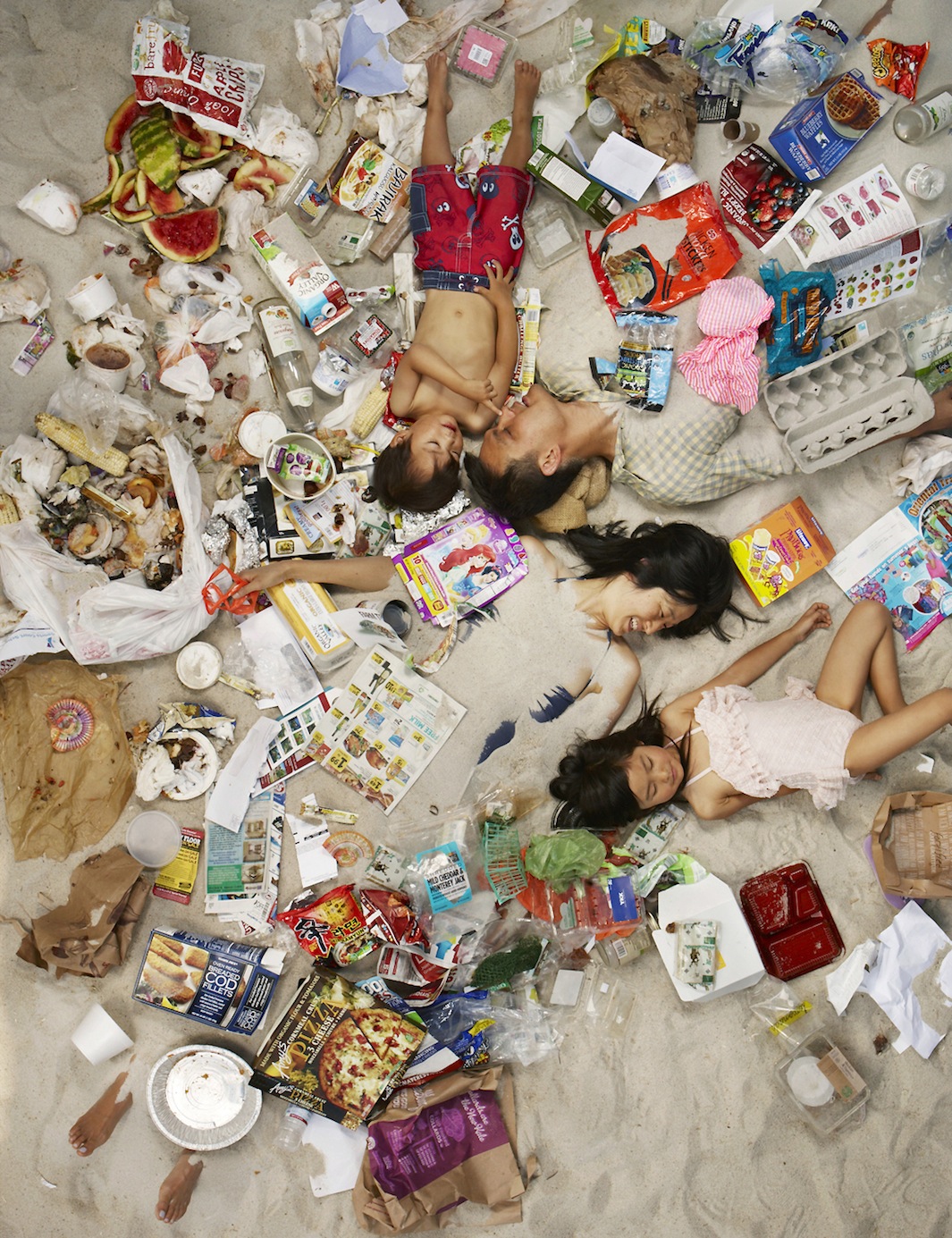
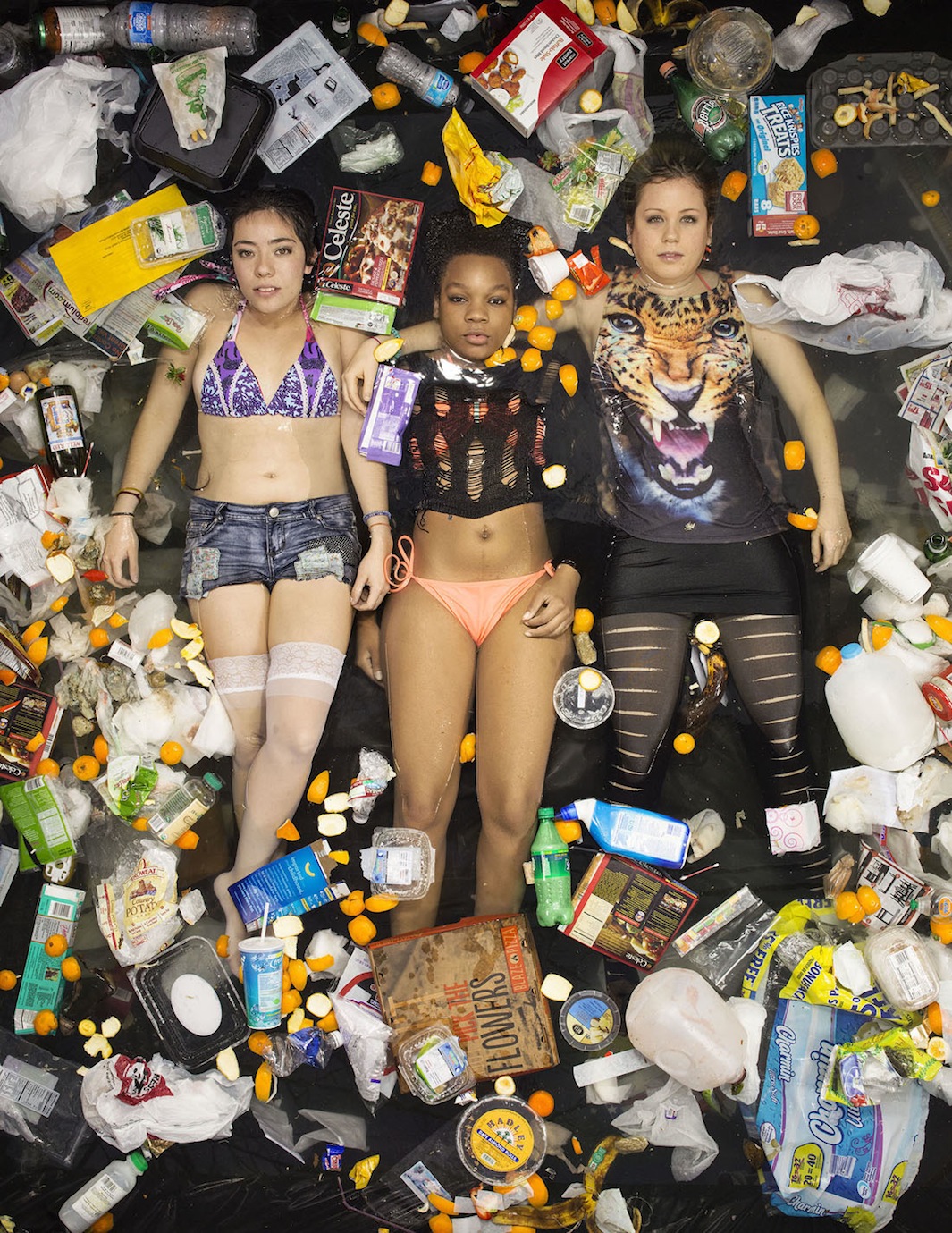
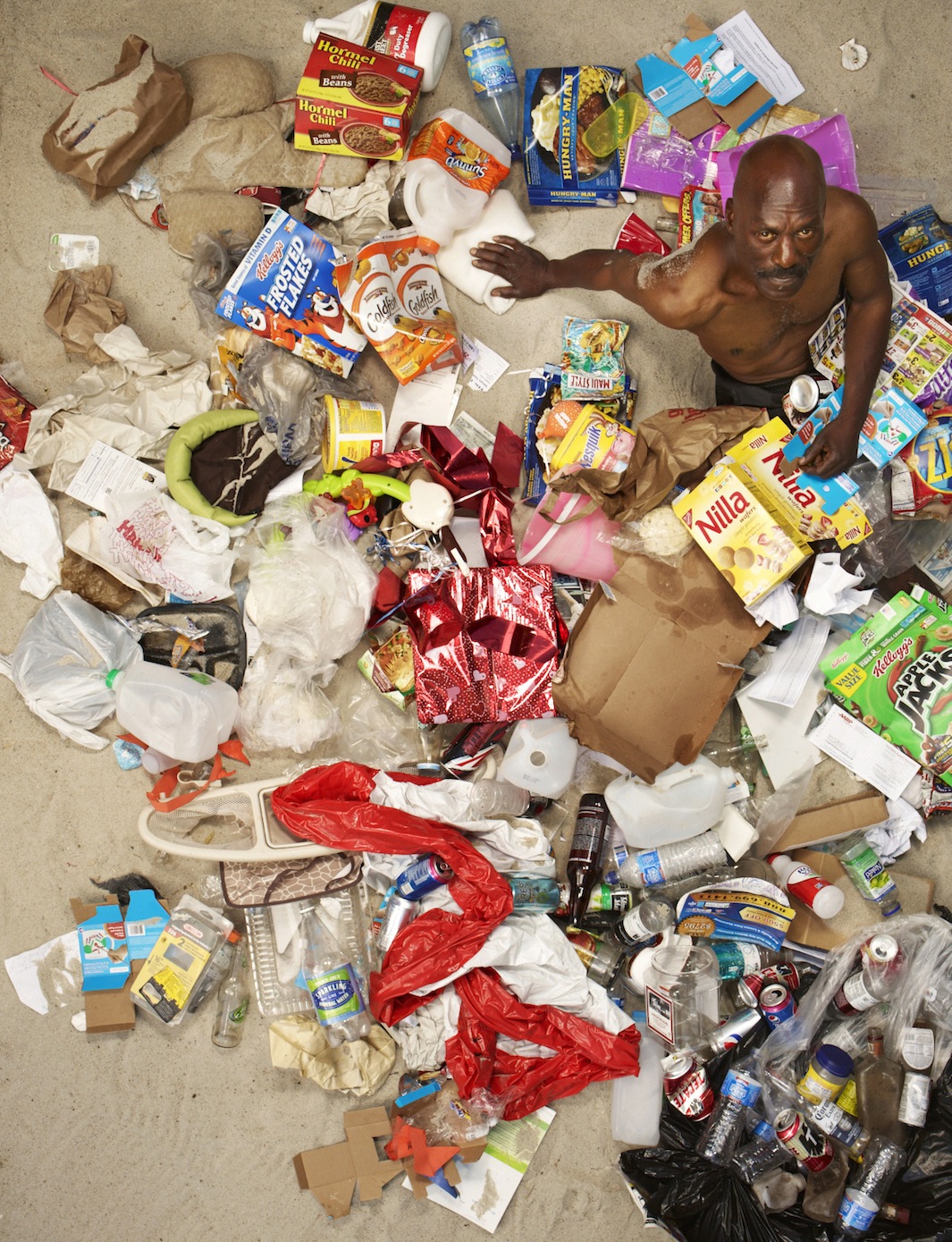
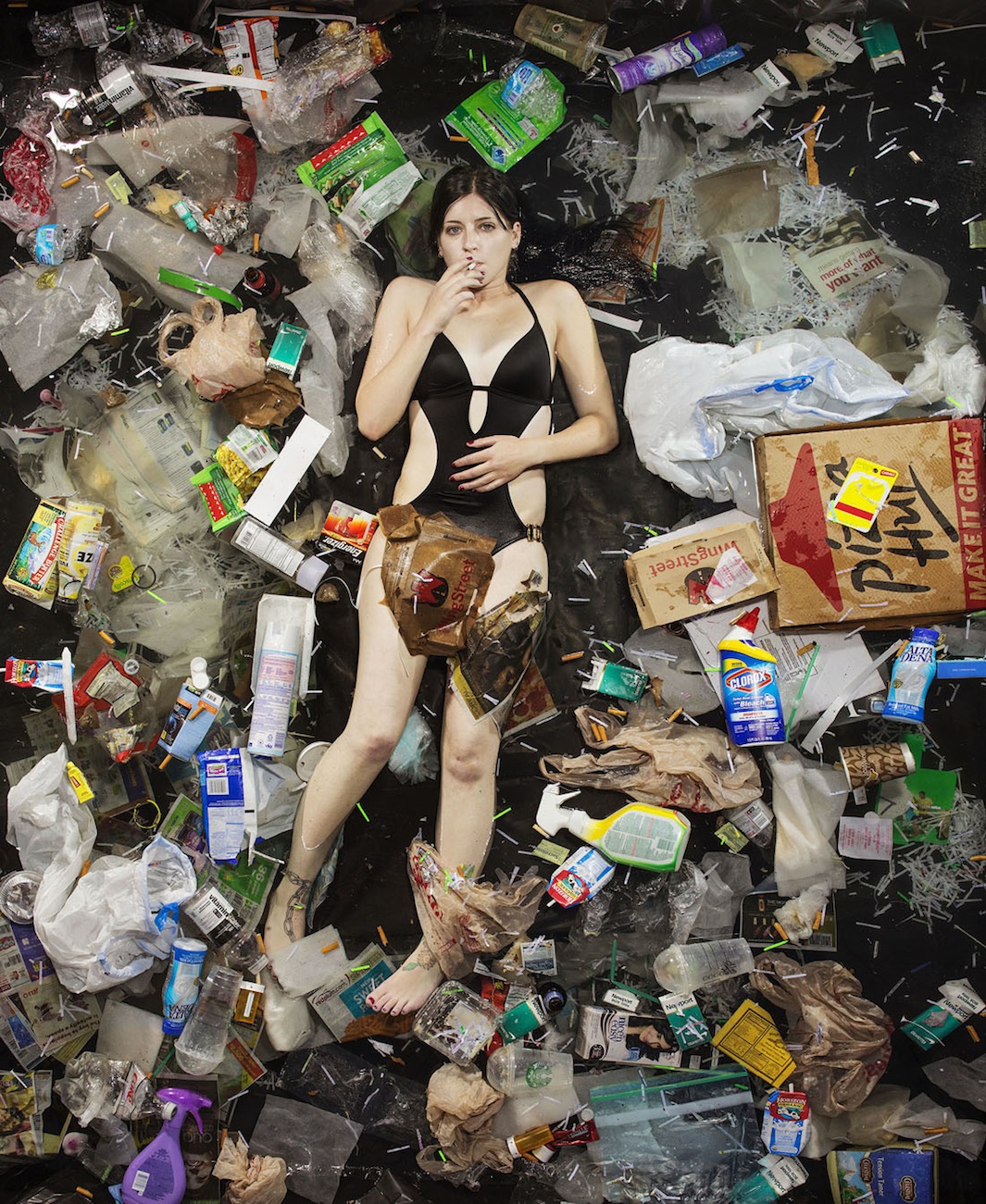
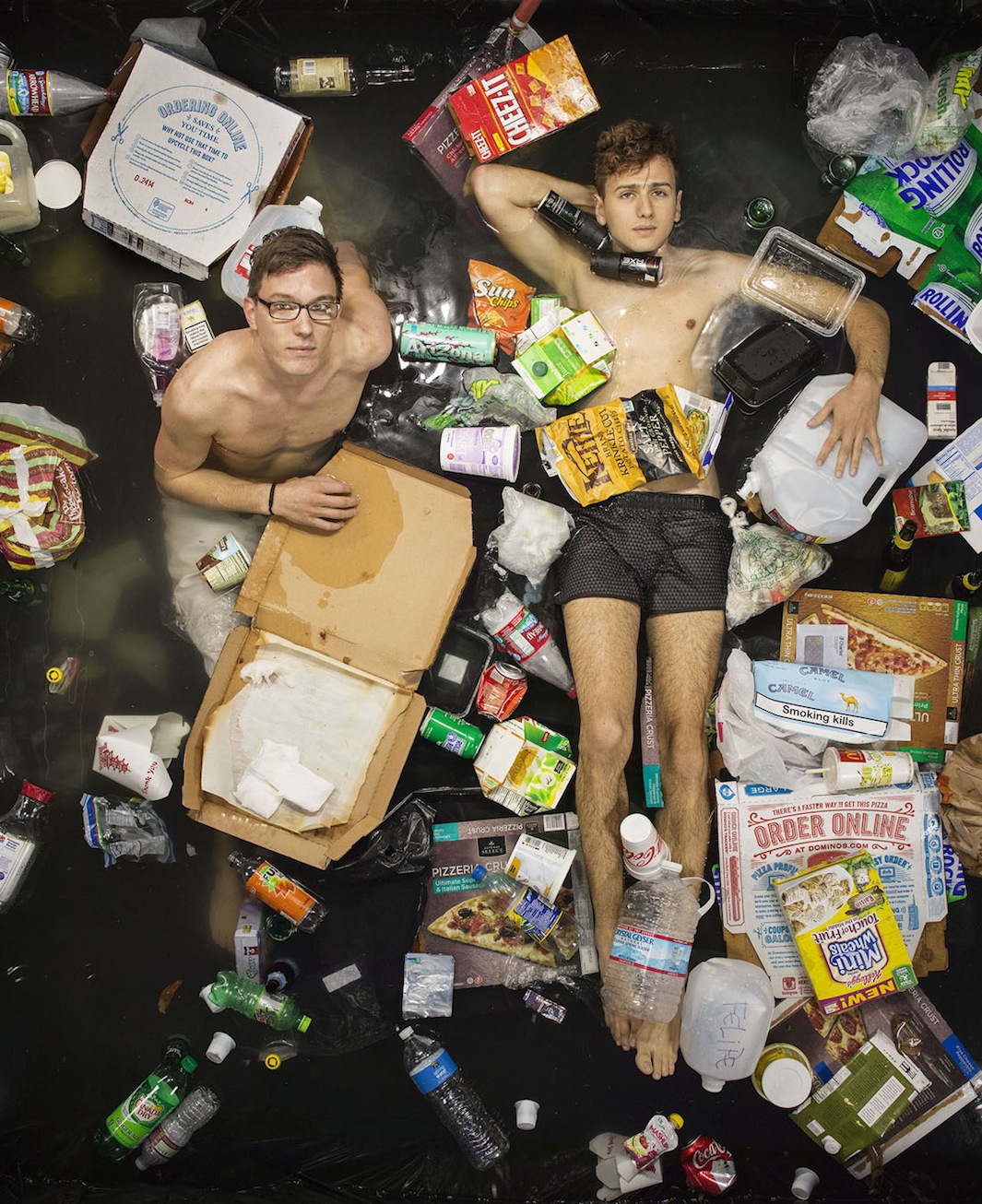
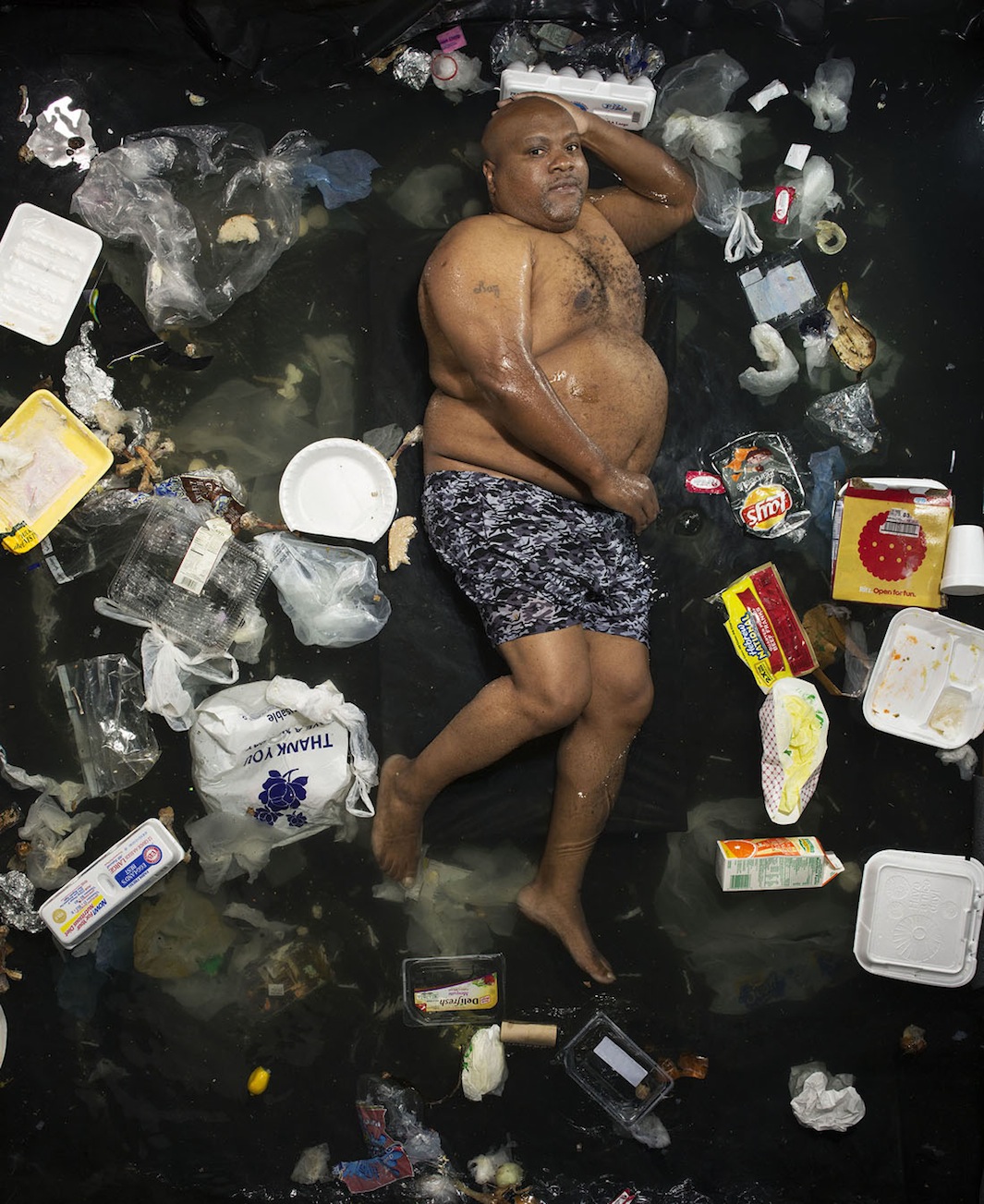
The United States has a trash problem. According to the U.S. Environmental Protection Agency, the average American produces more than 4 pounds of garbage per day. That’s more than double the amount produced in 1960, and it’s50 percent more than the amount produced by Western Europeans. In January, photographer Gregg Segal decided to put some imagery to those numbers. His ongoing series, “7 Days of Garbage,” shows Californian friends, neighbors, and relative strangers lying in the trash they created in one week.
Some of Segal’s subjects volunteered to be a part of the project because they believed in the idea behind it. Others were compensated for participating. Generally, Segal strove to include people from a variety of socioeconomic backgrounds. And while the amount of garbage varies by person, there were some people who produced more garbage than they were willing to bring to the shoot. “Of course, there were some people who edited their stuff. I said, ‘Is this really it?’ I think they didn’t want to include really foul stuff so it was just packaging stuff without the foul garbage. Other people didn’t edit and there were some nasty things that made for a stronger image,” Segal said.
Gregg Segal
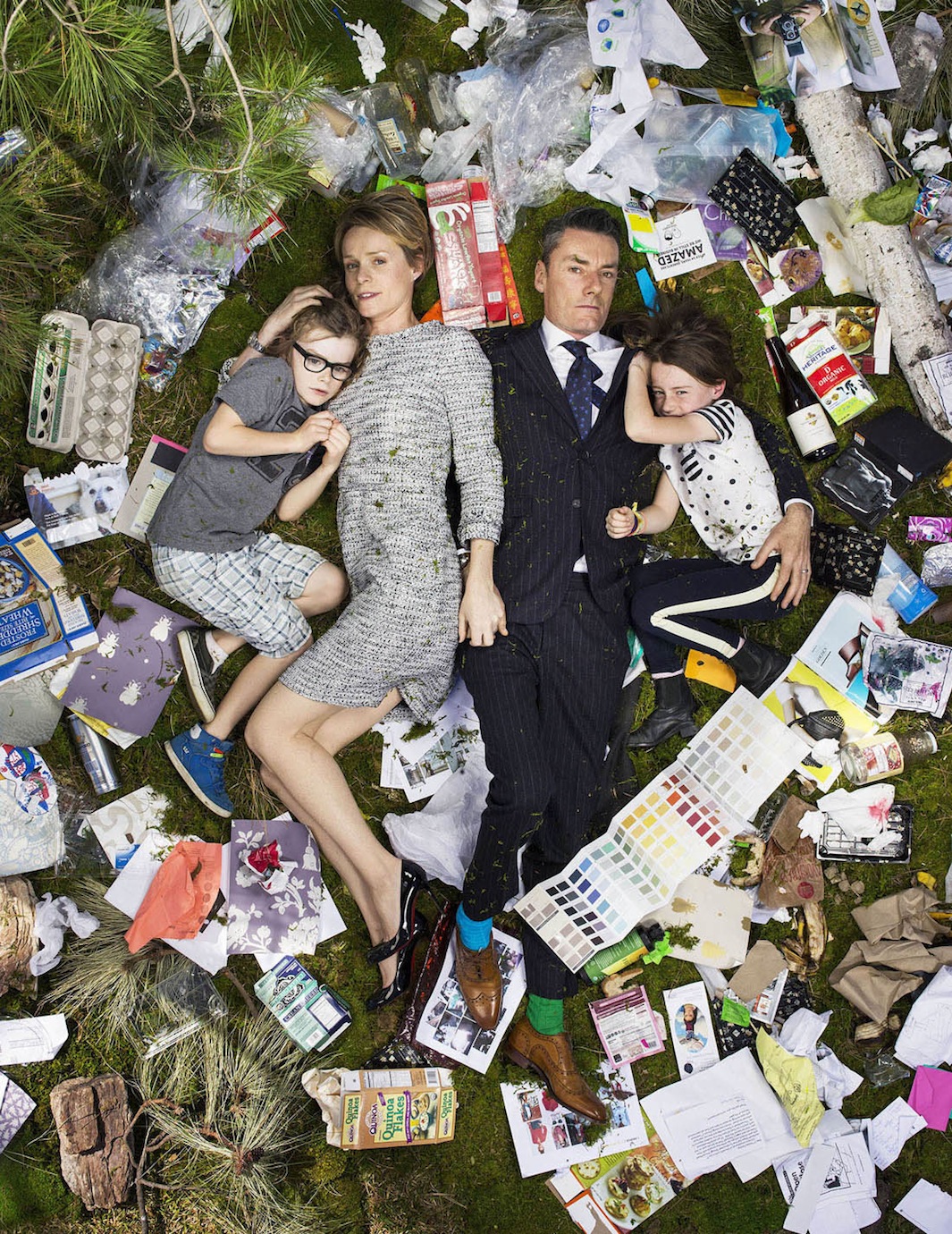
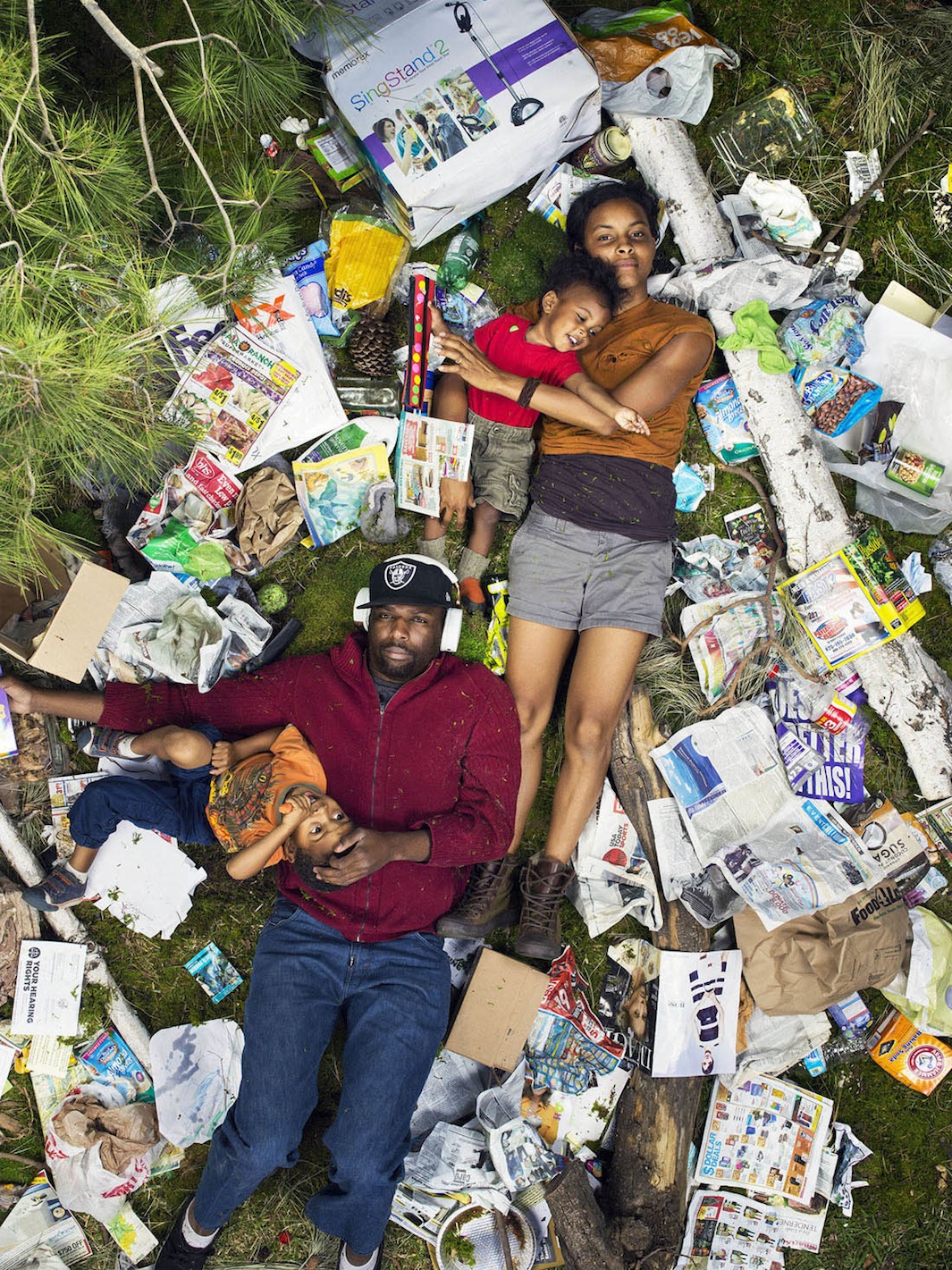
Segal used natural materials to transform his yard into artificial environments, like a forest floor or a sandy beach or a body of water, where he photographed all his subjects. "I shot from above to make it very clinical and clean and graphic. It’s kind of a nest, a bed we’re lying in with all this stuff, forcing us to reconcile what we’re producing, which hopefully causes some people to think a little bit more about what they’re consuming,” he said.
Naturally, some people had some hesitation about lying in garbage. “They thought it was kind of gross. I think there’s something mildly humiliating about it, but in a constructive way,” Segal said. “It’s kind of a once in a lifetime experience for people to be photographed with all their stuff. I think it’s seen as a kind of novelty for some people and the question of grossness was mitigated by the novelty factor.”
Segal posed for a photo, too, with his wife and son. “I didn’t want to act like I’m separate,” he said. “I wasn’t crazy about the picture, but I do think it’s important to show people. It’s not like I’m pointing the finger at them. I’m pointing it at all of us.”
As Segal continues to work on his series, he intends to shoot his subjects in a greater variety of constructed natural settings to enforce the idea that garbage is everywhere and that no environment is left untouched by it. “Obviously, the series is guiding people toward a confrontation with the excess that’s part of their lives. I’m hoping they recognize a lot of the garbage they produce is unnecessary,” he said. “It’s not necessarily their fault. We’re just cogs in a machine and you’re not culpable really but at the same time you are because you’re not doing anything, you’re not making any effort. There are some little steps you can take to lessen the amount of waste you produce.”
Segal’s work is included in this year’s edition of The Fence in Brooklyn.
What is this "new story" revolution?What follows is a collection of over 75 films and articles that touch this space.It's a digital library dedicated to exploring this new frontier in human consciousness - where we live into creation new & ancient ways of being, where we redefine our relationship with ourselves and the world, and where we remember all that we have forgot.
Most colleges prepare students to read a map of the world that's both outdated and distorted. From economics to history to politics to ecology, modern schools are failing to prepare students for the future on a fundamental level.To put it simply, most colleges are still running on a set of assumptions that were developed during the 20th century.
The world today is in crisis. Everybody knows that. But what is driving this crisis? It's a story, a story that is destroying the world. It's a story about our relationship to the world and to other humans, but we take this story for granted.
Pachamama, our dear Mother Earth, is 4.5 billion years old. She is home to an estimated 8.7 million species of life! This wondrous web of relationships is truly a gift to be a part of, and we can thank our growing and evolving Mother Earth for the eyes and mind we have to appreciate our relationship with her. Just think - we evolved to have a form of consciousness that would eventually see that, as Earth is one meta-organism, we are the consciousness of that organism.
Starting with the most relevant at the top, these are the best documentaries that capture the spirit and motivation of the #OWS movement.What was Occupy about? These documentaries give a deeper voice to the slogans and chants.
Regenerative living is a revolutionary philosophy rooted in reciprocity, creativity, and care.At its core, it asks not just how we can reduce harm, but how we can restore, heal, and actively give back to the world around us.It's a shift from extraction to participation, from passive consumption to conscious co-creation.
Now that there are thousands of films on Films For Action, we realized the very best gems have really become buried all across our library, and for people new to this information, we needed a more guided way to dive in. Spread across 15 core themes, this collection aims to be that entry point. It is our attempt to curate the kind of crash-course curriculum on the state of the world we wish we had all got growing up, especially during high school and college, but didn't.
These documentaries expose the ugly truth about war and the governments who wage them. The US government is focused on in this collection because I am based in the US, and it is every citizen's duty to call out and name the crimes of their government.It's all too easy to decry the injustices of other countries while remaining silent when those crimes are committed by our own. But nothing good has ever come from silence when the truth is marginalized and lies are amplified.
GDP is a terrible way to measure economic progress. A post-growth future is about growing things that actually matter: happiness, health and social well-being.Every day on the TV, belt-way politicians and economists tell us the answer to our problems is more econcomic growth. And yet, a growing number of indictators show that this kind of "progress" isn't progress at all.
Our present moment is saturated in dystopian, apocalyptic fantasies of the future.As the late Mark Fisher said, "It's easier to imagine the end of the world than the end of capitalism.” We can envision a thousand ways that humanity might destroy itself and the rest of the world, but positive visions of the future remain severely lacking in comparison. Why is that?The Dark Ages led to the Renaissance. Feudalism led to capitalism. No era remains stagnant forever.
There are over 6,000 videos on Films For Action, hand-curated for their potential to inspire action and raise awareness on just about every topic related to making the world a better place.You've probably already seen our top 100 documentaries feature. Here are our 100 favorite short films.
About eighteen years ago, watching The Corporation inspired us - a few friends from Lawrence, KS - to launch Films For Action and “be the media” in our home town.We hosted dozens of film screenings, launched this website, and started to curate the best docs and videos in our library. Over the years, millions of people started coming here to watch “films for action,” thanks to people simply sharing these films on social media with their friends. That's it.
How does government really operate behind the scenes? Beyond all the slogans about freedom and democracy, how does our political system really work?Pretty much everyone is aware to some extent how corrupt and dysfunctional the US political system has become.
Documentaries have an incredible power to raise awareness and create transformative changes in consciousness both at the personal and global levels.Since 2006, we've watched hundreds of social change documentaries and cataloged the best of them in this library.
There are over 800 documentaries now cataloged in our library of social change films.That's probably way too many for any mortal to ever watch in a lifetime, let alone a few years. Surely some will attempt it, but for the rest of us, we thought it'd be great to highlight 93 of the best of them.
Subscribe for $5/mo to support us and watch over 50 patron-exclusive documentaries.